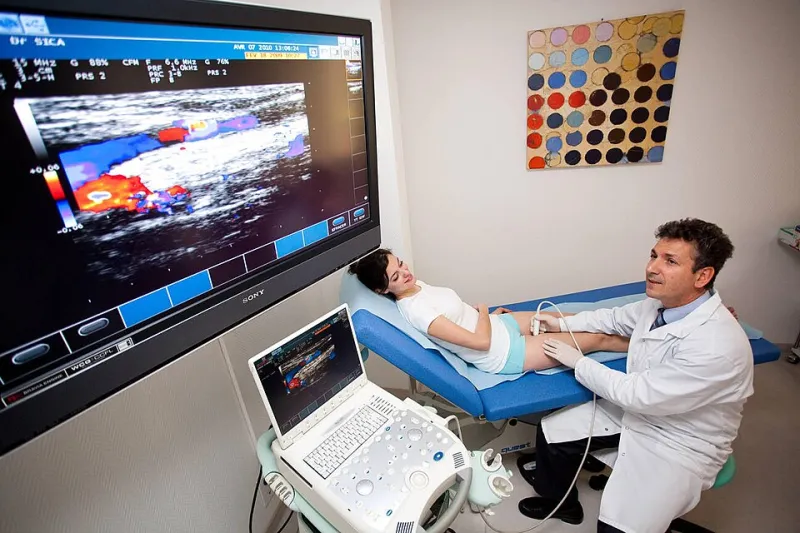
A Fair Hearing: Seeking an Independent Venous Opinion on CCSVI Without a Sales Pitch

Patients who raise the subject of CCSVI often describe the same difficulty: they want a proper conversation about their venous findings, but the discussion quickly becomes a choice between dismissal and a procedure package. That gap is real. A second opinion is one way to narrow it, provided both patient and clinician are clear about what is being asked.
A second opinion is not simply a second scan
In ordinary medical practice, a second opinion means another clinician reviews the evidence already available and offers an independent view. That may involve examining you, re-reading imaging, or discussing the case with your existing doctor. It does not automatically mean repeating tests.
This distinction matters in the CCSVI field because some commercial pathways bundle a scan, an interpretation and a treatment offer into one transaction. That is not an independent second opinion. If the clinician interpreting the scan also sells the procedure, or works in a clinic whose business model depends on finding a treatable narrowing, the review may still be clinically sincere, but it is not independent in the ordinary sense.
A genuine second opinion should be able to answer a clear question. Examples include: do these images show a venous abnormality by recognised criteria; is that abnormality likely to be clinically significant; are there alternative explanations for the symptoms; and what would a cautious vascular or neurological clinician recommend next?
What the NHS route can and cannot offer
The NHS does not offer venoplasty or stenting for CCSVI outside research, because the evidence that this approach changes the course of multiple sclerosis remains insufficient. That position is unlikely to be changed by asking for a second opinion, and patients should not approach an NHS referral as a route to a procedure that is not commissioned.
The NHS can still review venous symptoms on their own merits. If you have leg swelling, sudden pain, a suspected clot, varicose veins with skin changes, or other recognised vascular problems, those should be assessed in the usual way. A GP can refer you to a vascular service or neurology depending on the symptoms. It helps to be specific: describe what you experience, when it occurs, what makes it better or worse, and what you want reviewed. Asking for 'a CCSVI assessment' may be less useful than asking whether your symptoms or imaging suggest a recognised venous condition that falls within NHS care.
An NHS second opinion may also be possible within a hospital team, or through a consultant-to-consultant discussion, if you are already under specialist care. Waiting times vary, and access depends on local commissioning and clinical priority.
What private review can add, and where caution is needed
Private care can offer speed and choice of clinician. You may be able to see a vascular surgeon, interventional radiologist or neurologist with relevant experience, and ask them to review existing reports and images. Some insurers will cover a second opinion; self-pay patients should ask for a written estimate before booking.
Before choosing a private route, check the clinician's GMC registration and specialist registration, and check whether the provider is registered with the Care Quality Commission where applicable. Ask who will perform and report any ultrasound, what accreditation the sonographer holds, and whether the report will state the diagnostic criteria used. A useful second opinion should be willing to say 'I do not know' or 'the evidence does not support a firm conclusion'.
Be wary of packages that begin with a discounted scan and end with a recommended procedure. A second opinion should not require you to book treatment on the day. It should include time to consider the advice, and it should be prepared to put the opinion in writing.
Questions that separate assessment from reassurance
The wording of a consultation can reveal a great deal. Consider asking:
- What exact clinical question are you answering for me?
- Are you reviewing my existing imaging, ordering new imaging, or both?
- Do you offer, perform or profit from the procedure you may recommend?
- Which published criteria are you using to interpret the scan, and what are their limitations?
- Could my symptoms be explained by something else, and how would you exclude that?
- What would change your advice?
- What are the risks, alternatives and likely follow-up if I do nothing?
- Will you write to my GP or referring clinician with your opinion?
- If my scan is normal, what will you recommend then?
These questions are not hostile. They are the ordinary questions a careful patient should be able to ask of any clinician. A practitioner who welcomes them is more likely to be offering assessment rather than reassurance with a price list.
What a second opinion cannot resolve
A second opinion cannot prove that CCSVI causes multiple sclerosis, nor can it guarantee that a procedure will help. The evidence base remains unsettled and does not support routine venoplasty or stenting for CCSVI in UK practice. A review may clarify whether a venous finding is present, whether it meets recognised criteria, and whether another vascular diagnosis should be considered. It cannot turn an uncertain treatment into an established one.
It also cannot remove risk. Venous procedures carry recognised hazards, including thrombosis, bleeding, stent migration and the need for ongoing anticoagulation in some cases. Patients who travel abroad for treatment should think carefully about aftercare and about how complications would be managed at home.
Preparing for a fair hearing
Gather your reports, images, symptom timeline, medication list and any questions you want answered. Ask for copies of imaging rather than summaries alone. Decide in advance what you want from the consultation: clarification, a written opinion, a management plan, or simply help understanding what the evidence does and does not show.
A fair hearing does not mean a favourable answer. It means an answer given on clinical grounds, with uncertainties acknowledged, and without pressure to buy. That is a reasonable standard to seek, whether the opinion comes from an NHS clinic or an independent private consultation.