Risk in Context: How to Read Numbers on a Venous Consent Form

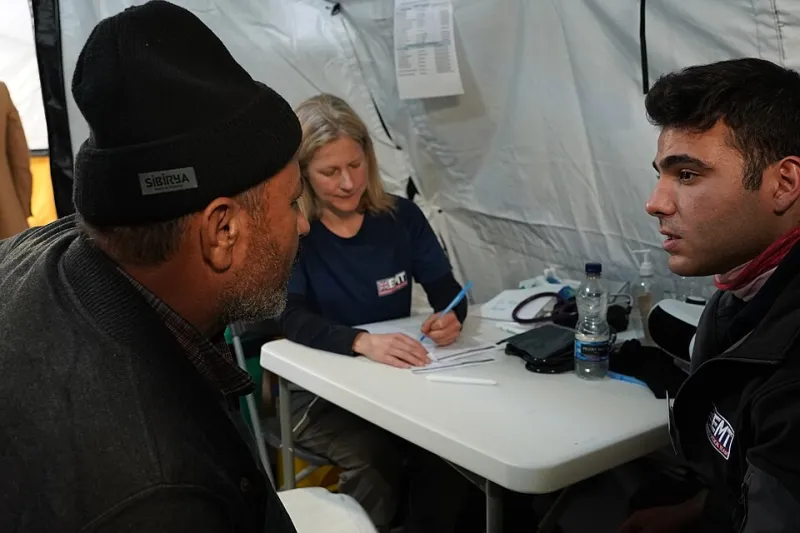
Photo: patient reading consent form with doctor risk statistics UK clinic, via aboutpreschool.net
Consent forms are not intended to alarm. Most aim to be clear. Yet a sentence such as 'the risk of a serious complication is about one in a hundred' can leave a patient reassured without being fully informed. The figure may be accurate, but it is incomplete. To understand it, you need to know what is being counted, over what period, in which patients, and compared with what alternative.
This article is about reading risk numbers, not about whether any particular venous procedure is advisable. It applies to NHS and private care alike. In CCSVI-related discussions, where evidence remains contested and private pathways are common, precise risk communication is especially important. A calm, clear conversation is a reasonable expectation.
The denominator is part of the number
A percentage or ratio only means something when the denominator is clear. One in a hundred what? One hundred patients, one hundred procedures, one hundred catheter-days, or one hundred years of follow-up? A risk quoted per procedure may look smaller than the same risk accumulated over a year. A risk quoted per patient may hide the fact that some patients have more than one procedure.
Ask: one in a hundred of what, over what time frame? If the clinic cannot answer, the number is not yet useful.
Absolute and relative risk are not the same
Absolute risk is your own chance of an outcome over a stated period. Relative risk compares one group with another. Relative statements can sound dramatic while absolute differences remain small, or sound modest while absolute differences matter.
Suppose, hypothetically, a clinic says a treatment halves the risk of a clot. If the baseline risk without treatment is 2 in 1,000 over a year, halving it gives 1 in 1,000: an absolute reduction of 1 in 1,000. If the baseline is 2 in 100, halving it gives 1 in 100: an absolute reduction of 1 in 100. The phrase 'by half' is identical; the meaning for patients is not. Always ask for the absolute figure as well as the relative one.
Base rates depend on the patient in front of you
Risk figures come from groups of people. The relevant question is whether the group resembles you. A published series of 40 patients with particular anatomy may not describe a 60-year-old with a history of thrombosis, different medication, or other vascular disease. Small studies also carry more uncertainty: no complications in a small series does not prove that a complication cannot happen.
Ask how many patients the figure is based on, whether they were selected, and whether the clinic's own results are similar. A number drawn from a specialist centre may not transfer to a different setting.
Vague words are not measurements
'Low', 'rare', 'minimal' and 'safe' are not numbers. They may be used honestly, but they cannot be checked. 'Rare' in one clinic may mean one in a thousand; in another, one in ten thousand. Ask for the figure in natural frequencies: for example, 'out of 1,000 patients like me, how many would expect this complication over one year?' Natural frequencies are often easier to grasp than decimals.
Framing matters too. '95% success' and '5% failure' describe the same outcome. Ask for both the chance of benefit and the chance of harm, in the same format and over the same period.
What UK consent should include
UK consent guidance expects a conversation, not just a signature. Risks that a reasonable person in your position would want to know should be discussed in a way you can understand. That includes serious risks even if they are uncommon, and the alternatives to the proposed procedure. Private clinics are not exempt from that expectation.
You can ask for the patient information leaflet and consent form in advance. You can take time to consider them. If you feel rushed, that itself is worth noting.
Questions to ask before treating a risk figure as reassurance
- Is that absolute risk or relative risk?
- What is the denominator, and over what time period?
- What is the baseline risk for someone with my history and anatomy?
- How many patients was the figure based on, and were they like me?
- Does the figure come from this clinic, a published study, or a manufacturer's summary?
- What are the most common risks, and what are the most serious risks?
- What is the chance of benefit, expressed in the same way?
- What would happen if I chose monitoring or another option instead?
- How much uncertainty surrounds the estimate?
- Can I have these figures in writing?
A clinic that welcomes these questions is demonstrating the kind of communication that informed consent requires. A clinic that dismisses them is telling you something too.
Keeping the conversation grounded
None of this means that risk figures are untrustworthy. It means they need context. A patient who understands the denominator, the time frame, the baseline rate and the difference between absolute and relative risk is better placed to weigh a venous procedure against its alternatives. That is not a technical nicety. It is the difference between reassurance and informed choice.