CCSVI Evidence in 2026: What UK Patients Can Reasonably Conclude

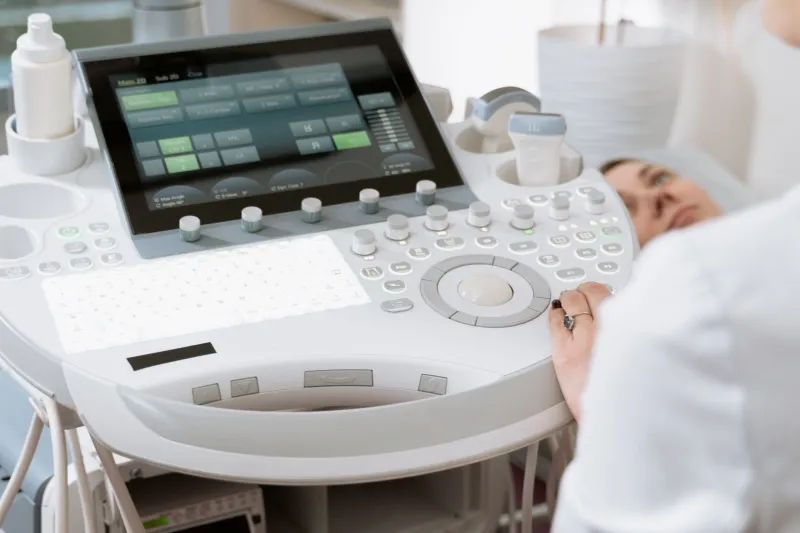
Photo: Lewis Clarke, CC BY-SA 2.0, via Wikimedia Commons
CCSVI—chronic cerebrospinal venous insufficiency—is a hypothesis rather than a settled diagnosis. It proposes that narrowed or poorly functioning veins in the neck and chest can impair blood drainage from the brain and spinal cord, and that this may contribute to multiple sclerosis (MS) and other neurological symptoms. The idea entered wider public discussion after 2009, when Paolo Zamboni and colleagues described abnormal venous flow patterns in people with MS. Since then, patients in the UK and elsewhere have asked whether balloon angioplasty—sometimes called liberation therapy—might help. As of November 2026, the honest answer is that the evidence remains insufficient to support it as a routine treatment, while research into venous flow and neurological disease continues.
For UK readers, the question is not whether symptoms are real. They are. The question is whether a particular venous abnormality, detected by a particular test, predicts benefit from a particular procedure. That is a much narrower question, and it is the one that clinical evidence must answer.
What CCSVI is and why the debate persists
CCSVI is not a single, universally agreed condition. Researchers have used different ultrasound criteria, different patient groups and different definitions of abnormal flow. Some studies have found more venous narrowing in people with MS than in controls; others have found little or no difference. Ultrasound findings can vary with operator technique, body position and hydration, which makes standardisation difficult. This matters because a test that gives inconsistent results is a weak foundation for diagnosis or treatment decisions.
The debate persists partly because the underlying idea is biologically plausible. Veins do drain the central nervous system, and venous abnormalities do occur in some people. But plausibility is not proof. Many conditions have plausible mechanisms that do not survive careful testing. In CCSVI research, the crucial gap has been between finding a narrowed vein and showing that correcting it changes the course of MS or reliably improves symptoms.
What the stronger studies have shown
The most informative evidence comes from randomised, sham-controlled trials and systematic reviews. These designs are important because symptoms such as fatigue, pain and mobility can fluctuate, and because people who undergo an invasive procedure often expect to feel better. In the Brave Dreams trial, published in 2018, venous angioplasty did not produce a clear, consistent advantage over a sham procedure on the prespecified clinical outcomes. Systematic reviews have likewise found that the quality and quantity of evidence are insufficient to establish benefit, while noting risks such as vein damage, restenosis, bleeding and thrombosis.
This does not mean that every patient report of improvement should be dismissed. Some people describe short-term changes in fatigue, cognition or warmth after venoplasty. But uncontrolled reports cannot separate treatment effect from expectation, natural fluctuation, concomitant care or selection bias. In a condition as variable as MS, that distinction is essential.
The UK position in 2026
Within the NHS, CCSVI testing and venoplasty are not routine services for MS. NICE interventional procedures guidance has previously concluded that the evidence on efficacy is inadequate and that the procedure should only be considered within special arrangements for clinical governance, consent and audit. UK neurologists and MS teams generally do not recommend venoplasty as a treatment for MS, and NHS commissioning does not support it as standard care. This is not a denial of patient experience; it reflects the current balance of evidence and the duty to avoid exposing patients to risk without demonstrated benefit.
Private provision exists in the UK and abroad. Some clinics offer Doppler ultrasound, MR venography or catheter venography, sometimes followed by angioplasty. The existence of a private market does not itself establish clinical effectiveness. Patients should expect any private provider to explain the limits of the evidence, the regulatory status of the practitioner and the arrangements for follow-up and complications.
What a vascular scan can and cannot establish
A vascular scan can show anatomy and flow. Doppler ultrasound can record flow velocities and direction; MR venography can show venous anatomy; catheter venography can demonstrate narrowing and pressure gradients. These are real findings. What a scan cannot do is prove that a venous abnormality is the cause of MS, predict who will respond to angioplasty, or confirm that a proposed treatment will improve disability.
Venous narrowing can occur in people without MS, and normal variation is common. A scan result therefore needs interpretation in context, by someone with appropriate expertise, and alongside neurological assessment. A report that presents a scan finding as a diagnosis of CCSVI, or as a reason to start an invasive procedure, should be treated cautiously.
Registry data: useful, but not proof
Registry data from the UK and Europe have helped document safety signals, complications and patterns of care. They are useful for generating hypotheses and for tracking what happens outside trials. They are not a substitute for controlled evidence. People who seek private treatment may differ from those who do not, and registries often rely on self-reported outcomes. A promising registry signal should lead to better trials, not to confident marketing claims.
Questions to ask before private investigation
Before booking a private scan, UK patients could reasonably ask:
- Which specific test is being proposed, and what does it measure?
- What is the evidence that this finding predicts a response to treatment?
- Who will report the scan, and what are their qualifications and registration?
- What are the risks of the scan or any subsequent procedure?
- How will the results be shared with my GP or neurologist?
- What is the total cost, including follow-up and management of complications?
- Is the clinic registered with the Care Quality Commission where required, and what is its complaints process?
Weighing hope with evidence
Patients are entitled to take symptoms seriously and to ask difficult questions. They are also entitled to clear information about uncertainty. In 2026, CCSVI remains an area of legitimate scientific interest but not an established treatment pathway for MS. The most responsible position for UK patients is to seek neurological assessment through the NHS, discuss any private investigation with their usual clinicians, and be wary of claims that outrun the evidence. Hope is not served by avoiding uncertainty; it is served by understanding it.