A Good Story Is Not a Trial: Weighing Patient Accounts of CCSVI Treatment

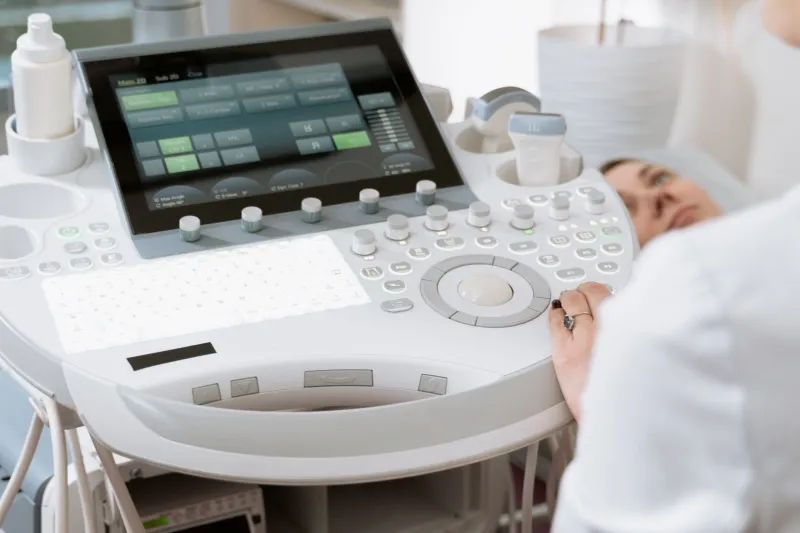
Photo: BLMArizona, Public domain, via Wikimedia Commons
Anyone who has spent time in an online forum for a long-term neurological condition will have read a message like this: 'I had the procedure three months ago. I can walk further, my fatigue has lifted, and I wish I had done it years ago.'
Such accounts are not trivial. They describe real people, real relief and real money spent. But a testimonial and a clinical trial answer different questions, and confusing the two is one of the easiest ways for a patient to make an expensive decision on shaky ground.
Why testimonials persuade so effectively
Human beings are pattern-seeking and socially attuned. A first-person account from someone with the same diagnosis carries a weight that a table of hazard ratios never will. It is specific, emotional and easy to imagine applying to oneself. It also arrives without the caveats that clutter research reporting.
There is nothing foolish about being moved by that. The mistake is treating vividness as a proxy for reliability.
What a testimonial can and cannot tell you
A testimonial can tell you that a person believes they improved. It can tell you what the experience of treatment was like, how the clinic behaved, how the travel was arranged and whether they felt listened to. All of that is genuinely useful.
It cannot tell you whether the treatment caused the improvement, because a single person has no comparison group and no way of knowing what would have happened otherwise. That is not a criticism of the patient. It is a limitation built into the design.
Four ordinary explanations that look like a treatment effect
Expectation and placebo response. Expectation is a real biological phenomenon. People who travel, pay a substantial sum and undergo an invasive procedure under anaesthetic generally expect to feel different. Symptoms such as fatigue and pain are especially responsive to expectation.
The natural course of a relapsing condition. Multiple sclerosis in particular fluctuates. Relapses recover, sometimes substantially, and remissions can last months or years. A procedure timed at a low point will often be followed by improvement for reasons that have nothing to do with the stent.
Regression to the mean. People tend to seek treatment when symptoms are at their worst. Extremes are usually followed by movement back towards the middle, whether or not anything is done.
Co-interventions and changed behaviour. After an operation, people often rest more, take new supplements, resume physiotherapy, stop smoking or simply pay closer attention to their bodies. Any of these can produce measurable change.
Add to this the fact that forums are populated by those who stayed well enough to post, and that people rarely announce a procedure that made no difference, and the picture of who reports success becomes significantly less representative.
What the trials actually asked
The relevant evidence comes from randomised, sham-controlled studies, in which participants were assigned to real venoplasty or a simulated procedure and neither group knew which they had received. The largest such trial, published in 2018, found no significant difference between the two groups on its primary combined outcome, although individual participants in both arms reported improvements.
That last detail matters, and it is frequently misreported in both directions. The honest reading is not that nobody improved, nor that the treatment is proven to work. It is that improvement was observed in people who did not receive the treatment, at rates comparable to those who did. When both groups improve, the improvement cannot be attributed to the intervention.
This site has previously set out what UK readers can reasonably conclude from the current evidence base. The short version is that the case for venoplasty in CCSVI remains unproven, and that further well-designed research would be needed to change that.
What UK rules say about clinic claims
The regulatory framework is narrower than many patients assume. Under the Human Medicines Regulations 2012, advertising prescription-only medicines to the public is prohibited in the UK, and the Advertising Standards Authority's CAP Code extends that principle to advertisements that reference such medicines, including through testimonials.
In practice this means a clinic may provide factual, balanced information about a procedure, but may not promote a prescription-only treatment to the public using patient stories, nor make claims of efficacy that the evidence does not support. Patients who believe an advertisement has crossed that line can complain to the ASA, and concerns about medicines advertising can be raised with the MHRA.
Separately, doctors are expected under GMC guidance to be candid about the strength of evidence for procedures they offer, particularly where the intervention is innovative or the evidence contested. Consent obtained without that candour is weaker consent.
A short method for reading any testimonial
When you encounter a compelling account, it is worth asking:
- When was the procedure, and how long has the person been followed up?
- What else changed in that period: medication, rehabilitation, employment, season?
- How was improvement measured, or is it a general impression?
- Are there people who did not improve, and what happened to them?
- Was the account solicited, incentivised or hosted by the provider?
- Does it describe a complication honestly, or only the outcome?
None of these questions imply dishonesty. They simply establish how much weight the account can bear.
Holding two things at once
It is possible, and reasonable, to take patient experience seriously while declining to treat it as proof. A well-conducted trial does not tell a patient that their fatigue is imaginary. It tells them that, on average, the intervention did not outperform a simulation of it, and that the honest expected value of the procedure is uncertain.
Anecdotes are not useless. They generate hypotheses, they expose harms, and they map the human experience of care. What they cannot do is substitute for a control group.
If you decide to proceed anyway
Adults are entitled to make decisions that the evidence does not fully endorse. If you do, protect your own ability to evaluate the outcome later. Record your symptoms before treatment using a validated measure, such as a quality-of-life scale, and note the dates. Keep a simple diary through the following twelve months. Note every change in medication and every period of relapse or remission.
It will not resolve the question of causation. It will at least mean that, when you look back, you are comparing like with like rather than trusting a memory that has already been reshaped by hope.