The Words We Use: A Patient's Glossary of CCSVI and Venous Research

Photo: open medical dictionary and glossary pages with stethoscope on desk, via www.ucleeds.ac.uk
Reading about CCSVI, venous disease and private vascular scans can feel like learning a second language. Some terms are precise; others carry assumptions that are not always justified. This glossary is intended to help UK patients read more confidently and ask better questions. It is not a diagnostic tool. Where a term has a technical meaning, the definition below is deliberately plain, and the caution notes point to where meaning can be stretched.
Anatomy and imaging
Jugular veins. The large veins in the neck that return blood from the head to the heart. The internal jugular veins are the ones most often examined in CCSVI research.
Azygos vein. A vein in the chest that drains the back of the chest wall and connects with the superior vena cava. It has been studied in CCSVI because it is part of the venous drainage route from the spine and chest.
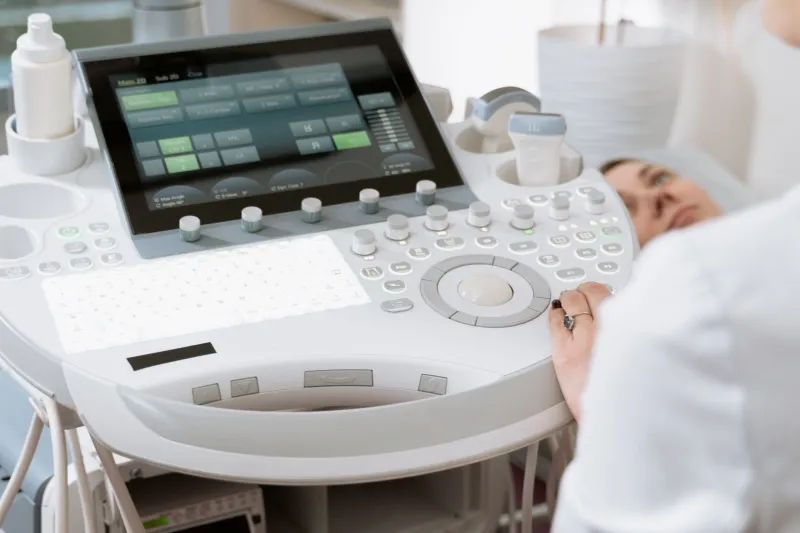
Doppler ultrasound. An ultrasound technique that shows blood flow direction and speed. In venous work it is used to look for narrowing and reversed flow. The result depends heavily on the operator's technique and the criteria used, so a report should state the protocol followed.
Catheter venography. An X-ray test in which contrast dye is injected through a catheter to show veins. It is more invasive than ultrasound and is usually used when a procedure is being considered or performed.
Flow, blockage and pressure
Stenosis. A narrowing of a blood vessel. In veins, a stenosis may be seen on imaging, but its clinical importance depends on whether it causes a pressure gradient or is simply a variant of normal anatomy. A reported stenosis is not automatically a problem that needs treatment.
Reflux. Blood flowing backwards rather than towards the heart. In venous disease, reflux is often described in relation to valve function. In CCSVI research, reflux has been defined using specific timing and posture criteria; different studies have used different thresholds, which makes comparison difficult.
Venous insufficiency. A broad term for inadequate venous return, often due to valve failure or obstruction. It is commonly used in leg vein disease. When applied to the neck and chest in CCSVI, the term is being borrowed from another context and should be read with care.
Pressure gradient. A difference in blood pressure across a narrowing. Interventionalists often look for a gradient before treating a stenosis. A measurable gradient is more suggestive of a haemodynamic effect than a visual narrowing alone, though even this does not prove that symptoms will improve.
Patency. Openness of a vein or a treated segment. A patent vein is not blocked. Patency is a technical result; it does not by itself tell you whether symptoms improved.
Procedures and devices
Venoplasty. A procedure in which a balloon is inflated inside a vein to stretch a narrowing. It is also called balloon angioplasty. In CCSVI-adjacent care it is the procedure most often discussed. It is not the same as stenting.
Stenting. Placing a metal mesh tube in a vein to hold it open. Venous stents are used in some UK vascular services for selected conditions, but their use in the neck veins for CCSVI-type indications is controversial because of risks such as stent migration, fracture and the need for long-term medication.
Restenosis. A return of narrowing after a procedure. It can occur after venoplasty and is one reason why follow-up matters.
Liberation procedure. A campaigning term for venoplasty or stenting aimed at CCSVI. It is not a neutral clinical term and is best treated as advocacy language rather than a description of established treatment.
Research and evidence
Placebo. A comparison treatment given in a trial that is not expected to have a specific therapeutic effect. In procedural research, a sham procedure may be used. Placebo does not mean 'fake illness'; it refers to the effect of expectation, care and ritual, which can be real and measurable.
Randomised controlled trial (RCT). A study in which participants are allocated by chance to different treatments. Randomisation helps reduce bias. A well-conducted RCT is generally stronger evidence than a case series.
Blinding. Keeping participants, clinicians or assessors unaware of which treatment was given. Blinding is difficult in procedural trials but important because unblinded symptom reporting can be influenced by expectation.
Primary endpoint. The main outcome a trial is designed to measure. If a trial's primary endpoint is a scan measure rather than a symptom measure, a positive result does not necessarily mean patients felt better.
Surrogate marker. An indirect measure, such as a scan appearance or a blood test, used in place of a clinical outcome. Surrogate markers can be useful, but they are not a guarantee of patient benefit.
Statistical significance. A mathematical indication that a result is unlikely to be due to chance alone. It is not the same as clinical importance. A statistically significant difference may be too small for patients to notice.
Heterogeneity. Variation between studies in a review. High heterogeneity means the studies are not measuring the same thing in the same way, so a combined result should be interpreted cautiously.
Where meaning gets stretched
Three habits are worth watching. The first is turning a scan finding into a diagnosis. A stenosis on imaging is a description, not a disease. The second is using a technical result, such as patency, as a proxy for symptom relief. The third is borrowing a campaigning word, such as 'liberation', and treating it as if it were a neutral clinical category. None of these habits is unique to CCSVI discussions, but they are common enough to make plain-language vigilance useful.
A good question to carry into any consultation is simply: 'What do you mean by that word, and how would we know if it changed?' Clear definitions do not settle the evidence, but they make the conversation honest.