The Rulebook Behind the Result: Making Sense of a ‘CCSVI-Positive’ Ultrasound Report
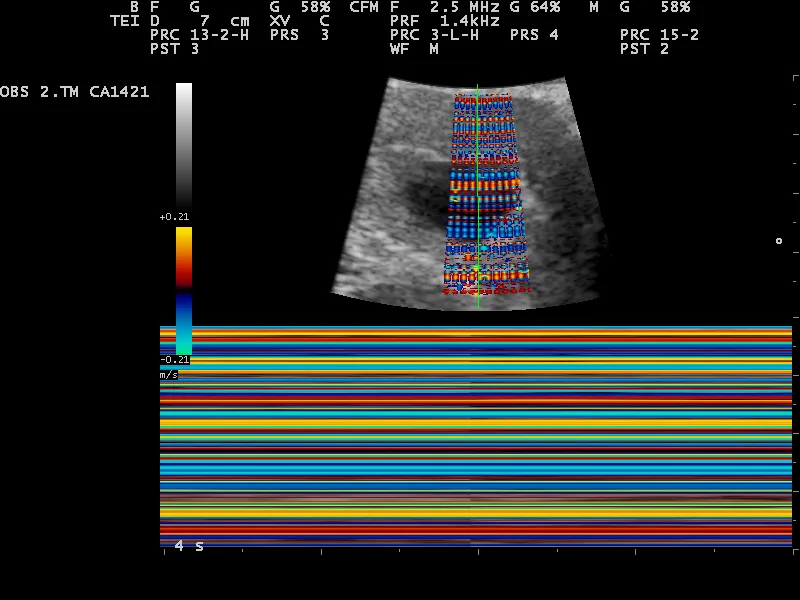
Photo: Nevit Dilmen (talk), CC BY-SA 3.0, via Wikimedia Commons
A UK patient may be told that a private venous ultrasound is ‘CCSVI-positive’. A friend or relative may have been told their scan is ‘CCSVI-negative’. The two words appear to settle the question. They do not. In venous ultrasound, ‘positive’ is shorthand for meeting a particular set of criteria, in a particular protocol, at a particular appointment, as interpreted by a particular reader. That does not make the scan worthless. It does mean the label needs its rulebook attached.
A label, not a laboratory result
A blood test for cholesterol reports a number against a standard reference range. A venous ultrasound report is different. It describes anatomy, flow and measurements, and then applies a set of rules to decide whether those findings count as abnormal. For CCSVI, there is no single internationally agreed definition that all clinics must use.
Research groups have used different combinations of findings. Some protocols emphasise reflux duration in the internal jugular or vertebral veins. Others give weight to narrowing, valve abnormalities, intraluminal defects or collateral pathways. Thresholds vary. Some criteria require more than one finding to be present; others may be met by a single measurement. The veins examined, the patient’s position and the breathing instructions can all differ.
This is why two clinics can produce different labels without either necessarily being dishonest or incompetent. They may simply be applying different rulebooks.
The protocol changes what can be seen
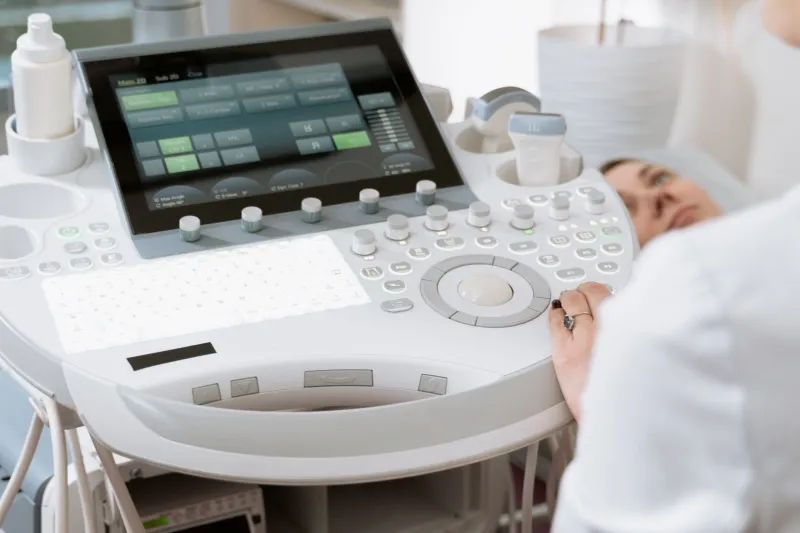
Venous ultrasound is sensitive to technique. A report may depend on whether the patient is lying flat or sitting upright, whether a Valsalva manoeuvre is performed, where the transducer is placed, how the Doppler angle is set, and whether the reader is looking for one specific pattern or a broader set of venous abnormalities.
A vein can also appear different at different moments. Flow patterns are not fixed like a bone on an X-ray. The skill of the operator, the equipment and the conditions of the examination all shape what is recorded.
For those reasons, a report that says only ‘CCSVI-positive’ is hard to interpret on its own. A useful report should state the protocol or criteria used, the veins examined, the measurements obtained, the patient’s position and any breathing manoeuvres, and whether the conclusion is based on one criterion or several. Without those details, the label is a conclusion without its workings.
The human factor is not a flaw; it is part of the method
Ultrasound is operator-dependent. That is not a criticism of sonographers or vascular scientists; it is a recognised feature of the technique. Training, experience and the way a report is written all influence the final wording. It matters whether the person who scanned the patient also interpreted the images, whether a second reader reviewed them, and whether the reader knew the patient’s symptoms or prior results.
A patient does not need to become an ultrasound expert to ask sensible questions. It is reasonable to ask who performed the scan, who wrote the report, whether the images are retained, and whether the report distinguishes between a measured finding and an overall impression.
Why the label does not transfer cleanly
A ‘CCSVI-positive’ result from one private clinic may not map neatly onto another clinic’s criteria. It may also sit awkwardly in NHS records. A GP or NHS vascular clinician may see the phrase ‘CCSVI-positive’ without the protocol, measurements or images that produced it. That can create a false impression of certainty.
The safer approach is to record the result with its context: for example, ‘private venous ultrasound on [date] reported CCSVI-positive under [named protocol], meeting [number] criteria; full report and images available’. That sentence tells an NHS clinician what was said and how it was reached. It does not ask them to accept the label as a diagnosis.
Patients can request a copy of the full report and ask whether images are available. If a private clinic cannot provide the protocol or measurements, that is useful information in itself. It does not automatically mean the scan was badly done, but it limits how far the label can travel.
What the label does and does not tell you
A positive label tells you that, under a particular set of rules, certain venous findings were recorded. It does not tell you the cause of your symptoms. It does not confirm or exclude multiple sclerosis. It does not prove that a procedure would help, and it does not tell you what the risks of a procedure would be.
Venous findings can overlap with normal variation and with other conditions. Symptoms attributed to CCSVI can also have other explanations. As of 2026, the evidence base does not support treating a CCSVI label as a diagnosis in its own right, nor as proof that an intervention will produce benefit. That is why the label should be read alongside a full clinical history, not instead of one.
Questions to ask before accepting the label
- Which protocol or criteria were used, and what thresholds were applied?
- Which veins were examined, in what position, and with which breathing manoeuvres?
- Who performed the scan and who interpreted it? Are the images retained?
- How many criteria were met, and were alternative explanations considered?
- Does the report state its limitations and avoid presenting the label as a diagnosis?
- How should the report be filed in NHS records, and can the GP be given the full context rather than the label alone?
A further question is often revealing: ‘What would have made this scan negative under your criteria?’ The answer shows how the clinic reached its conclusion and whether the result sits on a clear threshold or a borderline judgement.
A clearer sentence for appointments
Instead of saying ‘I have tested positive for CCSVI’, a patient might say: ‘A private ultrasound reported CCSVI-positive under a particular protocol. I have the full report and images. I am seeking NHS advice about my symptoms, not assuming that the label is a diagnosis.’ That wording is accurate, calm and useful. It gives the clinician something to work with without overstating the result.
‘Positive by whose criteria?’ is not a pedantic question. It is the question that turns a misleadingly simple label into usable information. A CCSVI-positive report is not a universal verdict. It is a result with terms and conditions — and patients are entitled to know what those terms are.